Previous Story

Table of contents
- Emerging economy’s unique challenges: why traditional finance falls short
- Inflation and currency instability
- High remittance cost
- The global unbanked population
- Why traditional finance falls short

From Experiment to Infrastructure: Bitcoin’s Role in Emerging Economies
“A purely peer-to-peer version of electronic cash would allow online payments to be sent directly from one party to another without going through a financial institution.”
— Bitcoin: A Peer-to-Peer Electronic Cash System, 2008
Bitcoin was born in the aftermath of the 2008 global financial crisis, when trust in centralized institutions and banks was highly shaken, creating the foundation for the role of Bitcoin as an alternative financial system. Proposed in October 2008 by Satoshi Nakamoto and launched on January 3, 2009, Bitcoin introduced a decentralized monetary system created to function without intermediaries, a path that continues to structure Bitcoin’s Role in Emerging Economies today. The network’s first block famously referenced a The Times headline about bank bailouts, underscoring Bitcoin’s roots as a response to financial vulnerability and reinforcing the long-term role of Bitcoin in uncertain economic times. Source: Cointelegraph
Yet in its initial years, Bitcoin was widely dismissed as a niche experiment — due to its high volatility, technical complexity, and difficulty to access. Over the years, however, the financial challenges faced in many emerging economies pointed out the Bitcoin’s Role in Emerging Economies as a complementary option. Challenges in traditional banking systems, including accessibility and cost, have increased interest in the role of Bitcoin and tools like a BTC Lightning wallet, which offer quicker and more flexible ways to transact in places where conventional financial services can be insufficient. What began as a small, niche experiment would nonetheless go on to reshape and transform global conversations about money, infrastructure, and finance.
Emerging economies face structural financial challenges that shape Bitcoin’s role as an alternative option rather than a replacement for local systems. Consistent inflation, expensive remittances, and highly unbanked populations highlights why traditional finance often falls short and why interest in the role of Bitcoin and tools like a BTC lightning wallet is growing in these regions.
One of the most visible pressures is inflation. In Venezuela, for example, official estimates indicate inflation was around 600% by 2026, severely diminishing and eroding the purchasing power of local currency and reducing the confidence in cash savings and traditional banking services. Source: IMF
In Argentina, inflation was very high as well as illustrating how households and businesses in emerging economies must constantly adapt to rapidly changing prices. In such environments, some citizens explore Bitcoin’s Role in Emerging Economies as a store-of-value alternative, while recognizing that Bitcoin’s own price volatility means it is used cautiously and alongside local currencies.
Remittances are a financial blood in many emerging economies across Africa, South Asia, and Southeast Asia, yet sending money remains costly. According to the World Bank’s Remittance Prices Worldwide report, average global remittance costs were still around 6% for key corridors from G8 countries in early 2025, with Sub-Saharan Africa the most expensive region at about 8.78% on average. Source: WO
These expenses decrease the value received by low-income families; in response, some users are testing cross-border transfers using Bitcoin and BTC lightning wallet solutions to send smaller payments more effortlessly, where regulations and infrastructure permit.
According to the World Bank, around 1.7 billion adults worldwide remain unbanked. A high share of this population lives in India, Africa, and Southeast Asia.
Common barriers include lack of nearby bank branches, documentation requirements, and limited financial knowledge Source: World Bank As a result, many individuals rely on cash-based or informal financial alternatives that offer limited security and flexibility.
In neglected areas, legacy financial infrastructure is frequently centralized, difficult to modify, and costly to maintain. Accessibility is diminished for individuals and small enterprises in emerging economies due to high fees, restricted reach, and operational inefficiencies. Alternative solutions that can function alongside current institutions without requiring complete banking access are in high demand as a result of these shortcomings.
Within this context, Bitcoin’s Role in Emerging Economies is emerging around these use cases: long-term savings, cross-border transfers, and always-on digital payments, particularly where local payment rails are slow or restricted.
In several emerging economies, practical use cases have emerged — from official experiments in national policy to grassroots peer‑to‑peer activity and scalable payment networks. These developments illustrate how the role of Bitcoin can move beyond speculation toward supporting broader access to financial services.
El Salvador pioneered the idea of integrating Bitcoin into a nation’s financial framework, initially making Bitcoin legal tender in 2021 to improve access to digital payments and remittances. The authorities framed this option as a way to improve financial inclusion and reduce remittance expenses for Salvadorans receiving money from abroad, often via dollar remittances that are crucial for the country’s economy.
Although its mandatory legal tender status was reversed making Bitcoin use voluntary Source:BBC — the experiment illustrated how governments in emerging economies explored new infrastructure alternatives and approaches.
Nigeria has become one of the world’s leading emerging economies for crypto adoption. In Nigeria, grassroots cryptocurrency activity — originally rooted in peer‑to‑peer trading to bypass banking restrictions — has been a consistent feature of everyday finance. Source: Creditcoin
P2P platforms allow users to exchange naira for Bitcoin directly with each other, often using crypto for small business transfers, savings, and cross-border payments, highlighting Bitcoin’s Role in Emerging Economies at a grassroots level.
The Lightning Network – a second‑layer payment protocol on Bitcoin to enable instant and affordable low cost transactions. Across global user bases, Lightning adoption has increased significantly, with mainstream platforms integrating the network and a sharp increase in the share of Bitcoin payments routed through Lightning, indicating stronger practical utility for everyday use. Source: Coingate This use case makes a BTC lightning wallet a practical tool for small, frequent payments where connectivity and regulation permit.
In emerging economies, Bitcoin’s infrastructure layer is forming around use cases such as remittances, merchant payments, and digital services, especially where conventional payment rails are slow, costly, or have limited access. For users who already hold Bitcoin, a BTC lightning wallet can help route small-value transactions more efficiently than on-chain transfers, supporting local commerce, tipping, and micro‑work.
These illustrations reflect an emerging pattern where the role of Bitcoin in emerging economies is not limited to investment or speculation. Instead, Bitcoin and associated technologies like Lightning can serve as complementary infrastructure, offering additional ways to transfer value that can be integrated with existing financial systems and digital payment behaviors.
Although having access to Bitcoin is a first step, its true potential is realized only when it becomes easy and practical to use. In many emerging economies, navigating complex interfaces, or dealing with slow or unreliable services can make digital currencies feel out of reach. This is where a BTC Lightning wallet becomes essential.
Speed Wallet offers a simple, secure, and intuitive way to buy, store, send, and receive Bitcoin, enabling fast transactions and low-cost payments through the Lightning Network. By removing technical barriers, Speed Wallet helps people focus on what matters most — staying connected to their finances and exploring Bitcoin’s Role in Emerging Economies as a reliable complement to traditional systems.
In regions where traditional financial infrastructure can fall short, Speed Wallet transforms Bitcoin from a speculative asset into a tool that can be used in everyday life, highlighting the practical role of Bitcoin in supporting financial inclusion and autonomy.
As Bitcoin continues to evolve, its potential to serve as practical financial infrastructure in emerging economies is becoming increasingly clear. From national policy experiments to grassroots peer-to-peer adoption, the role of Bitcoin is expanding beyond speculation toward everyday use in remittances, small-value payments, and digital commerce. Technologies like the BTC Lightning wallet are critical in this shift, enabling faster, low-cost transactions and bridging gaps where traditional systems are limited.
These developments underscore Bitcoin’s Role in Emerging Economies as a complementary layer of financial infrastructure that supports inclusion, flexibility, and autonomy. Looking ahead, Bitcoin and Lightning-enabled wallets are poised to strengthen local economies by providing tools that make digital money more accessible and practical. As infrastructure improves, we can expect broader adoption in daily commerce, micro-payments, and cross-border value transfer, demonstrating how a once-niche experiment has matured into a global financial resource.
Experience the future of everyday Bitcoin payments. Buy, send, and receive seamlessly with Speed Wallet. Make your Bitcoin work for you — fast, secure, and simple.


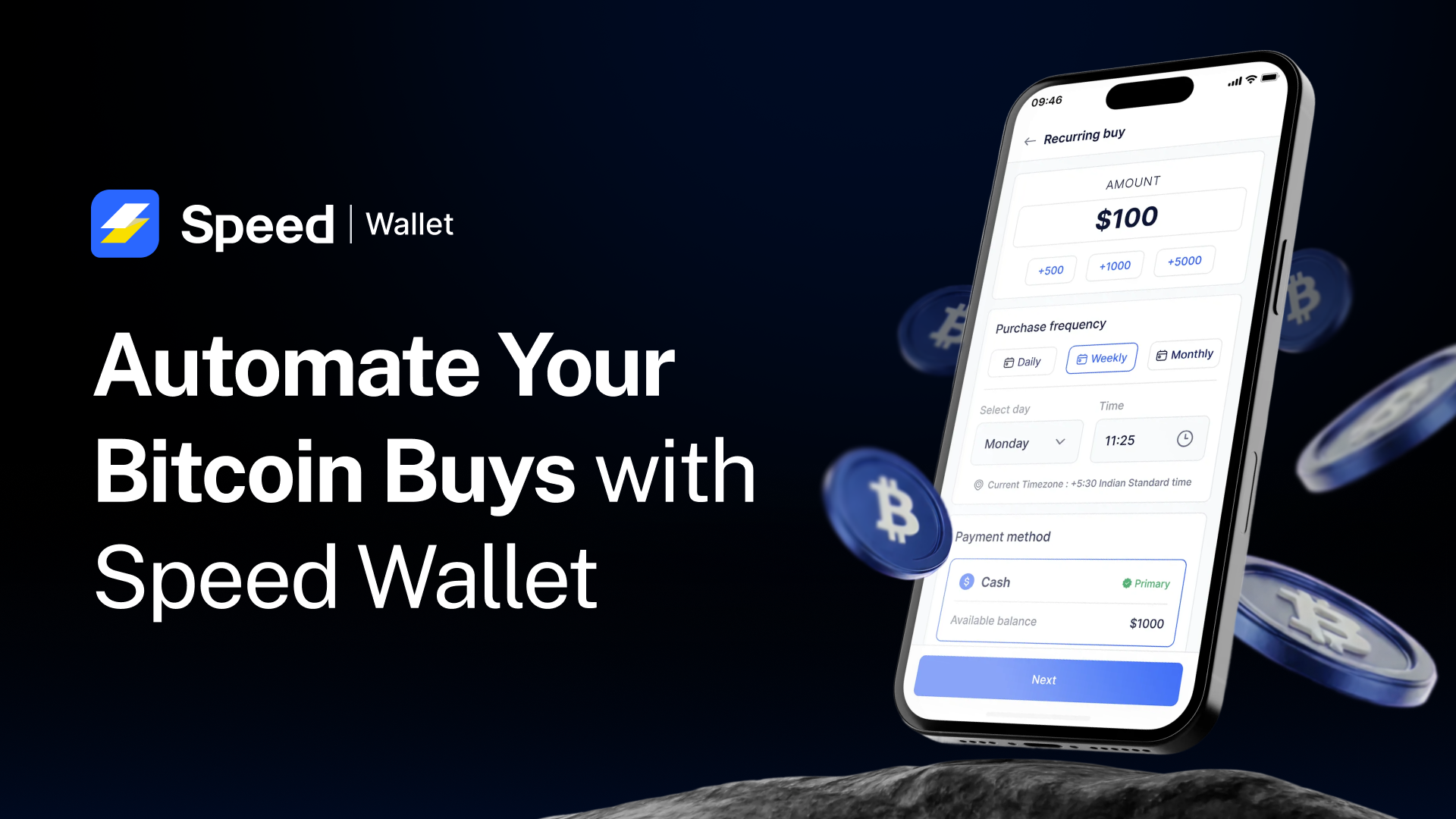
Recurring Buy on Speed Wallet lets you automate Bitcoin purchases, reduce market timing stress, and build a consistent long-term investment strategy.

Bitcoin vs traditional investments: Discover how Bitcoin compares to traditional investments during economic uncertainty, and which asset shows stronger resilience and long-term growth potential.
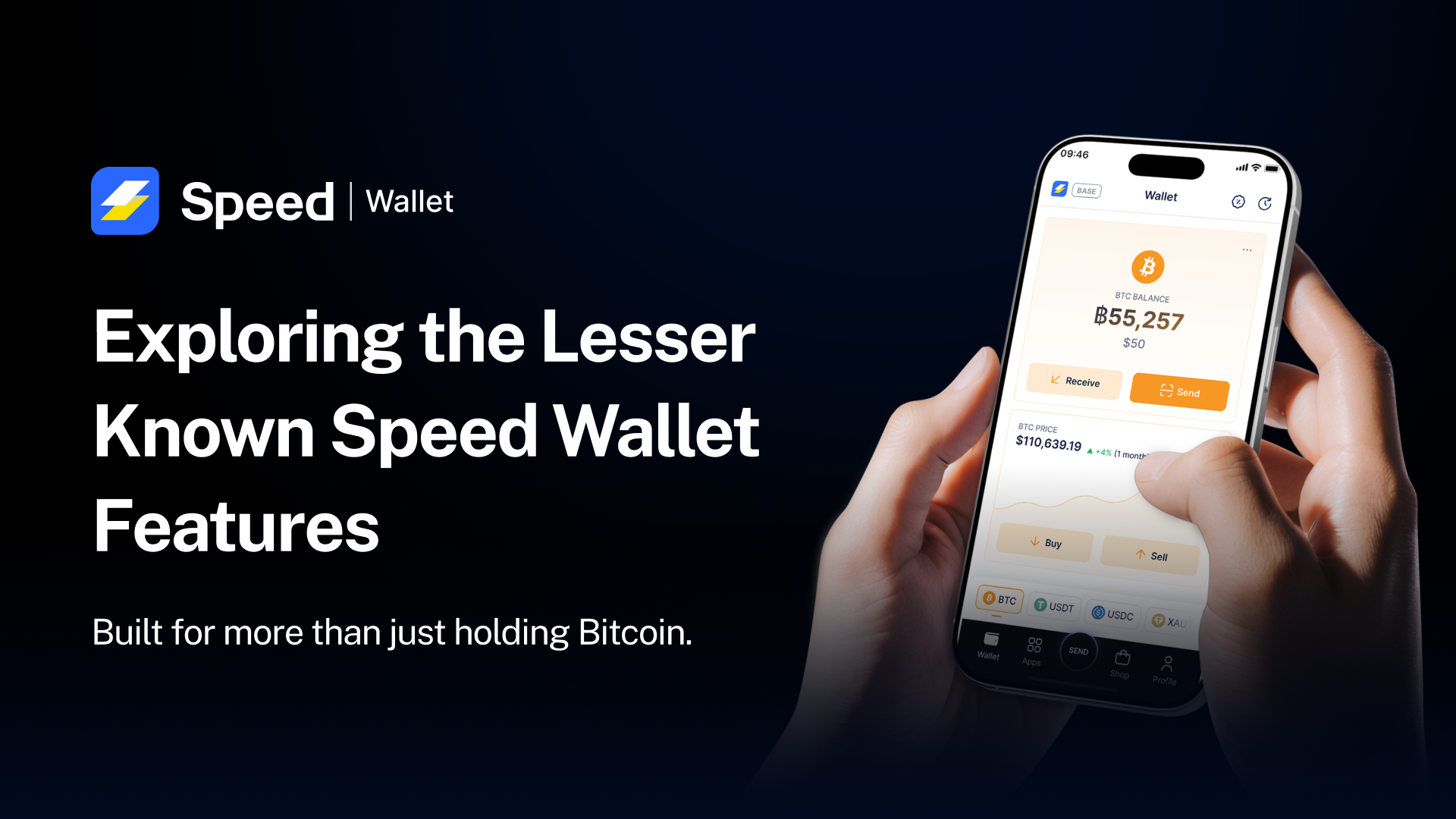
Explore how Speed Wallet enhances the Bitcoin experience with features designed for speed, automation, and convenience. From recurring buys to hybrid payments and integrated shopping, these features bring real-world functionality to a modern Lightning wallet app.

Bitcoin scams are getting smarter. From fake giveaways to romance traps, learn how to spot red flags and protect your crypto safely.